

International Day of Older Persons: Planning for Longer Lives with Dignity and Security
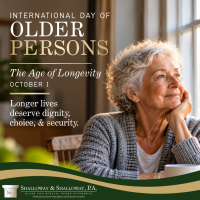
Each year on October 1, the world observes International Day of Older Persons, a day dedicated to recognizing the contributions of older adults while raising awareness of the challenges and opportunities that come with an aging population.
Established by the United Nations in 1990, the observance encourages individuals, families, communities, and policymakers to consider how we can create a society in which people are supported, respected, and included throughout every stage of life.
The 2026 theme, “The Age of Longevity: Rethinking Systems for Longer Lives,” asks an increasingly important question: As people live longer, are the systems around them prepared to help them live those additional years with health, security, independence, and dignity?
For families navigating the realities of aging, that question is deeply personal.
Longer Lives Bring New Opportunities and New Challenges
Living longer is something to celebrate. Older adults continue to contribute to their families, workplaces, communities, and future generations in countless ways.
At the same time, increased longevity can mean a greater likelihood that individuals and their families will eventually need to address issues involving healthcare, long-term care, caregiving, housing, financial security, diminished capacity, or disability.
The world’s population is aging rapidly. According to the World Health Organization, the number of people age 60 and older is expected to grow from approximately 1.1 billion in 2023 to 2.1 billion by 2050.
These demographic changes make planning for later life increasingly important, not only for older adults themselves, but also for the spouses, adult children, relatives, and caregivers who may eventually help support them.
Dignity Means Having a Voice in Your Own Future
One of the most important principles in elder law is that planning is not simply about preparing for incapacity or protecting assets. It is also about preserving choice, independence, and dignity.
Whenever possible, older adults should remain active participants in decisions involving their finances, healthcare, living arrangements, and long-term care.
Planning ahead can help make those wishes clear.
Depending on an individual’s circumstances, that planning may include:
- Reviewing or creating durable powers of attorney and healthcare directives
- Making sure estate planning documents reflect current wishes and family circumstances
- Discussing preferences for future care and living arrangements
- Evaluating how long-term care could be paid for
- Understanding available Medicaid and public-benefit programs
- Planning for the needs of a spouse or family member with a disability
- Reviewing beneficiary designations, ownership of assets, and other financial arrangements
- Identifying trusted individuals who can assist if help is eventually needed
These conversations are often easier when they happen before a medical emergency or caregiving crisis forces a family to make decisions quickly.
Supporting Caregivers Is Part of Supporting Older Adults
Longer lives also affect the people providing care.
Spouses, adult children, relatives, and friends frequently take on significant responsibilities as an older loved one’s needs change. They may coordinate medical appointments, manage finances, provide transportation, oversee medications, research care options, or help with daily activities.
Over time, those responsibilities can become complicated and overwhelming, particularly when families are unsure what legal authority they have or what resources may be available.
Families can prepare by talking openly about who may be able to help, where important legal and financial information is located, what the older adult wants, and what professional or community resources may be available.
Planning does not eliminate every difficult decision, but it can give families a clearer path when those decisions arise.
Inclusion Matters, Too
International Day of Older Persons is also an opportunity to challenge assumptions about aging.
Age should not automatically be equated with incapacity, dependence, or an inability to contribute. The World Health Organization has identified ageism as a significant concern affecting older adults’ health, well-being, quality of life, and social participation.
For older adults who also live with disabilities, barriers to inclusion can be even more significant. Accessible services, appropriate supports, thoughtful legal planning, and respect for individual decision-making can all help people remain connected to their communities and maintain greater control over their lives.
Families can contribute in simple but meaningful ways: include older relatives in conversations, ask rather than assume what assistance they want, help them stay socially connected, and make sure their wishes remain central when planning for the future.
What Can Families Do Now?
International Day of Older Persons can serve as a reminder to begin conversations that are easy to postpone.
Ask your loved ones what matters most to them as they grow older. Review existing legal documents and determine whether they still reflect current circumstances. Talk about healthcare preferences, finances, caregiving, housing, and long-term care before those subjects become urgent.
And when a family member’s circumstances are complex, particularly when Medicaid eligibility, long-term care, incapacity, guardianship, special needs, or significant assets are involved, consider seeking guidance before making major legal or financial decisions.
Planning for More Than a Longer Life
A longer life should mean more than simply adding years.
It should include the opportunity to live those years with as much independence, security, connection, and dignity as possible.
International Day of Older Persons reminds us to recognize what older generations have contributed while also looking ahead. As our population lives longer, thoughtful planning can help ensure that individuals and families are better prepared for the legal, financial, healthcare, and caregiving decisions that may come with those additional years.
At Shalloway & Shalloway, P.A., we help individuals and families navigate the legal issues that accompany aging, disability, long-term care, Medicaid planning, and special needs. Proactive planning today can help protect choices, resources, and dignity for the years ahead.