

Florida Long-Term Care Insurance vs. Medicaid: How They Work Together
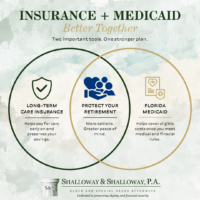
One of the biggest financial risks facing Florida retirees isn’t the stock market, it’s the cost of long-term care. Whether care is needed at home, in assisted living, or in a nursing facility, expenses can quickly drain a lifetime of savings. Understanding how Florida long-term care insurance and Florida Medicaid work together can help protect both your retirement and your family’s financial future.
According to industry estimates, the average cost of a private nursing home room in Florida can exceed $125,000 per year, and even assisted living or extensive home health care can cost tens of thousands of dollars annually. Few retirees have enough income to absorb these expenses indefinitely, and many mistakenly believe Medicare will cover them. Unfortunately, that assumption often leads to financial hardship.
The good news is that Florida long-term care insurance and Florida Medicaid are not competing strategies, they’re complementary ones. When used together as part of a comprehensive plan, they can protect both your independence and your life savings.
Understanding how these programs interact is one of the most important aspects of retirement planning in Florida.
The Long-Term Care Challenge
Nearly everyone knows someone who has required extended care because of Alzheimer’s disease, Parkinson’s disease, a stroke, or simple frailty associated with aging. In fact, studies consistently estimate that the majority of Americans over age 65 will need some form of long-term care during their lifetime.
Long-term care isn’t just nursing home care. It includes assistance with Activities of Daily Living (ADLs), which are everyday tasks that many people eventually need help performing because of illness, injury, or age-related conditions. These activities include:
- Bathing
- Dressing
- Eating
- Using the restroom
- Transferring from a bed or chair
- Managing cognitive impairments such as dementia
Care may be provided at home, in an assisted living facility, an adult day care center, or a skilled nursing facility. The longer care is needed, the more devastating the financial impact can become.
What Medicare Doesn’t Cover
One of the biggest misconceptions among retirees is that Medicare pays for long-term care.
It generally does not.
Medicare may cover a limited stay in a skilled nursing facility following a qualifying hospitalization and certain medically necessary home health services. However, it does not pay for ongoing custodial care, the type of assistance most people eventually require when they can no longer safely perform activities of daily living.
Once Medicare coverage ends, families are often left with only three choices:
- Pay privately
- Use long-term care insurance
- Qualify for Medicaid
What Florida Long-Term Care Insurance Covers
Florida long-term care insurance is designed specifically to help pay for extended care that traditional health insurance and Medicare do not cover.
Depending on the policy, long-term care insurance may provide benefits for:
- Home health care
- Assisted living
- Memory care
- Adult day care
- Skilled nursing facilities
- Hospice services
- Care coordination
Benefits are usually triggered when a physician certifies that the insured either cannot perform at least two Activities of Daily Living (ADLs) without assistance or suffers from a qualifying cognitive impairment.
Today’s marketplace includes several different products:
- Traditional long-term care insurance
- Hybrid life insurance with long-term care riders
- Hybrid annuities with long-term care benefits
- Short-term care insurance
Each has different premium structures, benefit periods, inflation protection options, and underwriting requirements.
The Advantages, and Limitations, of Long-Term Care Insurance
Long-term care insurance offers several significant advantages.
It allows individuals to:
- Remain at home longer
- Choose higher-quality care
- Delay spending retirement assets
- Preserve investment accounts
- Reduce the financial burden on spouses and children
- Maintain greater flexibility in selecting providers
However, insurance has limitations.
Policies have daily or monthly benefit limits, maximum benefit periods, elimination periods before benefits begin, and coverage limits. Inflation can also reduce purchasing power if policies lack inflation protection.
Most importantly, benefits eventually end.
If someone needs care for six, eight, or ten years, insurance alone may not be enough.
That’s where Medicaid often enters the picture.
Understanding Florida Medicaid Long-Term Care
Florida’s Medicaid Long-Term Care Program helps eligible individuals pay for ongoing care once they meet both medical and financial eligibility requirements.
Contrary to popular belief, Medicaid isn’t limited to nursing homes.
Depending upon an individual’s circumstances, benefits may include:
- Nursing facility care
- Home and community-based services
- Personal care assistance
- Adult day health care
- Case management
- Certain assisted living services through Florida’s Statewide Medicaid Managed Care Long-Term Care Program.
The goal is often to provide services in the least restrictive setting possible while still meeting medical needs.
Financial Eligibility
Qualifying for Medicaid is often the most confusing part of the process.
As of 2026, a single Florida applicant generally must have:
- No more than $2,000 in countable assets
- Monthly income generally limited to $2,982 unless excess income is directed into a Qualified Income Trust (often called a Miller Trust).
Certain assets are not counted, including, in many circumstances:
- A primary residence (subject to applicable rules)
- One automobile
- Personal belongings
- Household furnishings
- Certain prepaid burial arrangements
For married couples, additional protections exist.
The spouse remaining at home, the “community spouse,” may generally retain substantially more assets under the Community Spouse Resource Allowance, helping prevent impoverishment of the healthy spouse.
Because eligibility rules are complex and frequently updated, professional guidance is essential before making financial decisions.
The Five-Year Look-Back Period
One of Medicaid’s most misunderstood rules is the five-year look-back period.
When applying for long-term care Medicaid, Florida reviews most transfers made during the previous 60 months.
If assets were gifted or transferred for less than fair market value during that period, Medicaid may impose a penalty period during which it will not pay for long-term care services, even if the applicant otherwise qualifies financially.
This is why giving assets to children shortly before entering a nursing home often creates larger problems instead of solving them.
Proper planning years before care is needed provides significantly more options.
How Florida Long-Term Care Insurance and Medicaid Work Together
Many people mistakenly think they must choose between purchasing insurance and relying on Medicaid.
In reality, the two often work together extremely well.
Imagine a retiree purchases a policy that provides benefits for four years.
During those four years:
- Insurance pays much or all of the care costs.
- Retirement investments continue growing instead of being depleted.
- The surviving spouse experiences less financial stress.
- Additional planning opportunities may arise.
If care extends beyond the policy’s benefit period, Medicaid may then become available once financial eligibility requirements are met.
Instead of exhausting savings immediately, insurance effectively delays Medicaid eligibility while preserving significantly more family wealth.
Rather than viewing Medicaid as Plan A, many planners view it as the safety net after private insurance benefits have been exhausted.
Florida Long-Term Care Partnership Policies
Florida also participates in the Long-Term Care Partnership Program.
These specially qualified insurance policies provide an additional benefit beyond paying for care.
They offer dollar-for-dollar asset disregard.
For example, suppose a Partnership-qualified policy pays $300,000 in long-term care benefits.
If the insured later applies for Medicaid, they may generally protect an additional $300,000 of otherwise countable assets and still qualify, provided all other eligibility requirements are satisfied.
This creates a powerful incentive for middle-income retirees who want both insurance protection and additional flexibility should they eventually require Medicaid.
Not every long-term care policy is Partnership-qualified, so buyers should specifically ask whether the policy participates in Florida’s Partnership Program.
Common Planning Mistakes
Families frequently make avoidable mistakes, including:
- Waiting until health problems make insurance unavailable.
- Assuming Medicare covers nursing home care.
- Giving assets to children without understanding Medicaid rules.
- Purchasing inadequate insurance benefits.
- Failing to coordinate insurance with estate planning documents.
- Waiting until a crisis occurs before consulting an elder law attorney.
Each of these mistakes can substantially reduce planning options.
Insurance and Medicaid Can Pay for Care at the Same Time
One of the biggest misconceptions about long-term care planning is that an individual must completely exhaust their insurance benefits before Medicaid can begin paying for care. In many situations, that simply isn’t true.
Once a person qualifies for Florida Medicaid, Medicaid generally becomes the payer of last resort. That means any available private insurance benefits are applied first, and Medicaid may then pay the remaining covered costs that the individual is otherwise unable to pay.
Consider a simple example. Suppose Mary owns a long-term care insurance policy that pays a maximum benefit of $200 per day. Years later, she requires nursing home care that costs $425 per day. Because she has already met Medicaid’s medical and financial eligibility requirements, her insurance pays the first $200 each day. Medicaid may then cover the remaining allowable cost, after accounting for Mary’s required patient responsibility and other applicable program rules.
In this situation, Mary’s insurance has not been “used up” before Medicaid begins paying. Instead, both programs work together to meet the overall cost of her care.
The same principle can apply when an insurance policy reaches its monthly or lifetime maximum benefit. Medicaid does not require an individual to wait until every insurance dollar has been exhausted before providing assistance. Rather, Medicaid coordinates benefits with other available sources of payment and fills the gap once the applicant is otherwise eligible.
A Coordinated Strategy Provides the Greatest Protection
Long-term care planning should never be viewed as choosing between long-term care insurance and Medicaid. Instead, the strongest plans often combine both.
Long-term care insurance can help pay for care early on, preserve retirement savings, and provide greater flexibility in where and how care is received. If care continues beyond what insurance covers—or if expenses exceed policy benefits—Florida Medicaid may help cover additional eligible costs once medical and financial requirements are met.
Planning ahead is the key. Whether you’re considering long-term care insurance, exploring Medicaid eligibility, or looking for ways to protect your assets, developing a coordinated strategy before a health crisis occurs can provide more options and greater financial security for you and your family.
When Should You Begin Planning?
The best time to plan is long before care becomes necessary.
Many financial professionals recommend evaluating long-term care insurance during your 50s or early 60s, when premiums are generally more affordable and medical underwriting is easier to satisfy.
Likewise, Medicaid planning strategies—including trusts, gifting strategies where appropriate, and asset protection techniques—are often far more effective when implemented years before a long-term care event.
Crisis planning is sometimes possible, but proactive planning almost always provides greater flexibility.
A Coordinated Strategy Provides the Greatest Protection
Long-term care planning should never be viewed as an “insurance versus Medicaid” decision.
Instead, the strongest plans often combine multiple tools.
Long-term care insurance provides immediate financial protection, greater choice, and independence. Medicaid serves as a valuable safety net if care continues beyond the limits of private coverage. Florida Partnership policies can bridge the two by allowing policyholders to preserve additional assets while still qualifying for Medicaid if needed.
Rather than viewing long-term care insurance and Medicaid as separate or competing strategies, it is more accurate to think of them as complementary tools. Insurance may pay all of the cost of care initially, pay only a portion of the cost, or continue paying while Medicaid supplements covered expenses after eligibility has been established. The exact coordination depends on the type of policy, the setting in which care is received, and the individual’s financial circumstances.
In other words, Medicaid is not simply a backup plan that begins only after insurance ends. In many cases, the two programs work together to reduce out-of-pocket expenses, preserve assets, and ensure that individuals continue receiving the care they need even as costs increase over time.
Have Questions About Long-Term Care Planning?
Every family’s situation is different. Understanding how long-term care insurance and Florida Medicaid fit into your overall estate and asset protection plan starts with having the right information.
If you’d like guidance tailored to your circumstances, contact Shalloway & Shalloway, P.A. to schedule a consultation. We’re here to help you make informed decisions with confidence.
Frequently Asked Questions About Long-Term Care Insurance and Medicaid in Florida
Can you have long-term care insurance and Medicaid at the same time?
Yes. Many people assume they must use up all of their long-term care insurance benefits before Medicaid can help pay for care. In reality, once an individual qualifies for Florida Medicaid, Medicaid may coordinate with available insurance benefits and help cover eligible costs that exceed what the insurance policy pays.
Does Medicare pay for long-term care?
Generally, no. Medicare may cover a limited stay in a skilled nursing facility after a qualifying hospital stay and certain medically necessary home health services. However, it does not pay for ongoing custodial care, which is the type of long-term care many older adults eventually need.
What is the asset limit for Florida Medicaid?
As of 2026, a single Florida Medicaid applicant generally may have no more than $2,000 in countable assets, although certain assets—such as a primary residence in many circumstances, one vehicle, and personal belongings—may be exempt. Because eligibility rules can change, it’s important to seek professional guidance before making financial decisions.
What is the Florida Long-Term Care Partnership Program?
Florida’s Long-Term Care Partnership Program allows certain qualifying insurance policyholders to protect additional assets if they later apply for Medicaid. Generally, every dollar paid by a Partnership-qualified policy allows the policyholder to protect an additional dollar of otherwise countable assets, provided all Medicaid eligibility requirements are met.
When should you purchase long-term care insurance?
Many financial professionals recommend exploring long-term care insurance in your 50s or early 60s, when premiums are often lower and it may be easier to qualify medically. Waiting until health problems develop can reduce your options or make coverage unavailable.
Can I qualify for Medicaid if I gave assets to my children?
Possibly, but transfers made for less than fair market value during Medicaid’s five-year look-back period may result in a penalty period during which Medicaid will not pay for long-term care services. Because these rules are complex, families should consult an experienced elder law attorney before transferring assets.
Is long-term care insurance worth it if I might eventually need Medicaid?
For many people, yes. Long-term care insurance can help pay for care earlier, preserve retirement savings, reduce the financial burden on loved ones, and provide more choices about where care is received. If care continues beyond what the policy covers, Medicaid may serve as an important safety net once eligibility requirements are met.