

What Is a Qualified Income Trust (QIT)? A Guide to Medicaid Eligibility in Florida
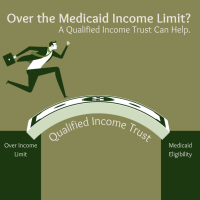
A Qualified Income Trust (QIT), also known as a Miller Trust, is a specialized legal tool used in Medicaid planning. Unlike other types of trusts that are designed for probate avoidance or asset protection, a QIT serves one very specific purpose: helping individuals qualify for Florida Medicaid long-term care benefits when their income exceeds eligibility limits.
Many people assume Medicaid is only available to those with very low income. However, Florida law provides a pathway for individuals with higher income to qualify, when a Qualified Income Trust is used properly.
The Medicaid “Income Gap” Problem
Before Qualified Income Trusts were allowed, Medicaid applicants faced a frustrating issue.
If an individual earned even $1 over the income limit, they would be denied benefits even if they had no meaningful assets to pay for care. This was commonly known as the “income gap.”
A Qualified Income Trust solves this problem by allowing excess income to be redirected into a separate account that Medicaid does not count when determining eligibility.
2026 Florida Medicaid Income Limits
As of 2026, the Medicaid income limit in Florida is:
- $2,982 per month (individual applicant)
This amount is adjusted annually based on Social Security cost-of-living increases.
What Counts as Income?
Medicaid considers the following when calculating income:
- Social Security benefits
- Pension payments
- Disability income
- IRA Required Minimum Distributions (RMDs)
- Certain annuities
👉 Important: Medicaid uses gross income, not net income.
What About IRAs?
An IRA can remain an exempt asset if:
- The applicant takes Required Minimum Distributions (RMDs)
- The distributions are taken in equal monthly payments
In this case, only the monthly RMD is counted as income.
How a Qualified Income Trust Works
When an applicant’s income exceeds the Medicaid cap, the excess amount can be deposited into a Qualified Income Trust.
This allows the individual to meet Medicaid’s income requirements while still accessing necessary funds for care-related expenses.
Key Requirements for a Qualified Income Trust in Florida
To be valid under Florida Medicaid rules, a QIT must meet strict legal requirements, specifically:
1. The Trust Must Be Irrevocable
As soon as the trust is created, it cannot be changed or revoked.
2. Who Can Create the Trust?
The trust may be established by:
- The Medicaid applicant
- A spouse
- Power of Attorney
- Guardian
- Elder law attorney
3. A Trustee Must Be Appointed
The Trustee is responsible for managing the trust.
- The applicant cannot serve as Trustee
- Acceptable Trustees include:
- Spouse
- Adult child
- Relative
- Trusted friend
- Professional fiduciary
The Trustee handles:
- Depositing income
- Paying approved expenses
- Maintaining records
- Ensuring Medicaid compliance
Qualified Income Trust Bank Account Rules
A QIT must have its own separate bank account.
- It can be a standard checking account
- It must not earn interest or income
How Deposits Work
Typically:
- Income is deposited into the applicant’s regular account
- The excess amount is transferred into the QIT
⚠️ Timing is critical:
The excess income must be deposited into the trust during the same month it is received.
In some cases, individuals may choose to deposit all income into the trust—this should be done under the guidance of an elder law attorney.
Example: How a QIT Helps You Qualify
Let’s break it down:
- Monthly Social Security: $2,500
- Pension: $1,000
- Total income: $3,500
Since the 2026 Medicaid limit is $2,982:
- Excess income: $518
By depositing $518 into a Qualified Income Trust each month, the applicant can qualify for Medicaid benefits.
What Can QIT Funds Be Used For?
Funds in a Qualified Income Trust are still accessible but only for approved expenses. For example:
- Medical expenses
- Health insurance premiums
- Nursing home costs
- Personal needs allowance
- Spouse allowance
However, the Trustee must ensure all distributions comply with Medicaid rules.
What Happens After Death? (Medicaid Payback Rule)
A Qualified Income Trust must include a Medicaid payback provision.
After the Medicaid recipient passes away:
- The State of Florida is reimbursed for Medicaid benefits received
- Any remaining funds may go to the individual’s heirs
Because of this, it is often advisable to use down the trust funds during the individual’s lifetime.
Why a Qualified Income Trust Matters
A Qualified Income Trust is one of the most effective tools available for individuals who:
- Need long-term care
- Have income above Medicaid limits
- Cannot afford private-pay care
Unlike asset-based strategies, a QIT:
- Can be implemented quickly
- Works immediately
- Is not subject to the five-year look-back period
Work With an Experienced Elder Law Attorney
Because Qualified Income Trusts must meet strict legal and administrative requirements, it is essential to work with a knowledgeable professional.
An experienced elder law attorney can:
- Properly draft the trust
- Ensure compliance with Medicaid rules
- Help avoid costly mistakes or delays
FAQs About Qualified Income Trusts
Do I need a Qualified Income Trust to qualify for Medicaid?
Only if your income exceeds Florida’s Medicaid limit.
Can I manage my own Qualified Income Trust?
No, you cannot serve as Trustee, but you can appoint someone you trust.
Can I still use the money in the trust?
Yes, but only for approved expenses and through the Trustee.
By Brooke Colbert Attorney at Shalloway & Shalloway, P.A.
This article is for informational purposes only and does not constitute legal advice. Every situation is unique. Please consult with an experienced elder law attorney to discuss your specific circumstances.